Mexcollin
Mexcollin is a musical project that moves effortlessly between emotional electronica and festival energy: future bass, pop-EDM, and bass music with melodies that aim to stay in your head and heart. On his social media and releases, he presents himself as an artist who understands music as a driving force, an idea that is repeated in his message of perseverance and “keep fighting.”
In 2026, the project opens a new chapter with releases like “Stars” and “To the Max,” reinforcing a more direct pop-EDM style without losing its introspective essence. The promotional material for “Stars” itself describes it as a journey “from shadow to light,” with a protagonist who rediscovers their inner spark.
Mexcollin doesn’t present himself as an artist of affectation, but as a project that speaks through songs: resilience, return, movement, hope. And therein lies the hook: if you’re drawn in by a drop, it’s easy to stay, drawn in by the feeling that each track propels a story forward.
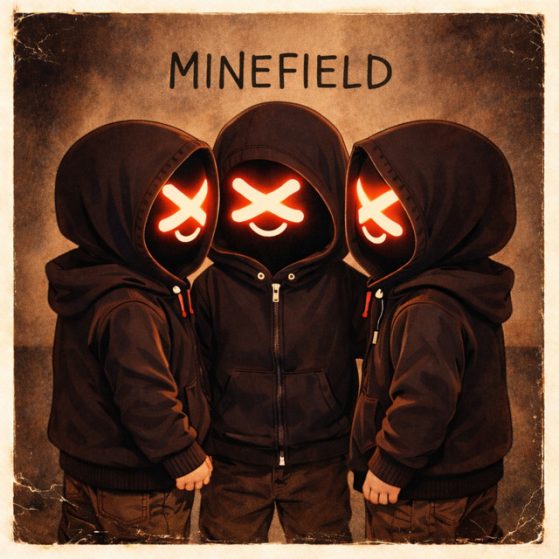
This song is a portrait of someone who grew up too fast.
From the first whisper, it doesn’t present an “adult” drama: it plunges you straight into the place where hurt becomes routine—a kitchen with two voices arguing, a lightbulb going out, and three children in a photo that no longer fits completely. The narrator doesn’t describe himself as a victim; he describes himself as a role: the oldest, the “strong” one, the one who carries the script without having chosen it.
Throughout the verses, the song builds its identity with harsh but clear images: promises that wash away “down the drain,” moves without explanation, younger siblings searching for direction in a house that ceased to be a home. And there, the heart of the concept emerges: the protagonist becomes a messenger, a peace treaty, a makeshift roof, someone holding up the impossible with a trembling column. It’s not a song about the breakup: it’s a song about the son who had to manage the breakup.
This song doesn’t just tell a story: it defines a project. It’s the kind of story that feels like chapter 1 of something bigger, because it leaves questions open: how does someone who learned not to cry rebuild themselves? What happens when the “strong” one finally breaks?
Mexcollin